
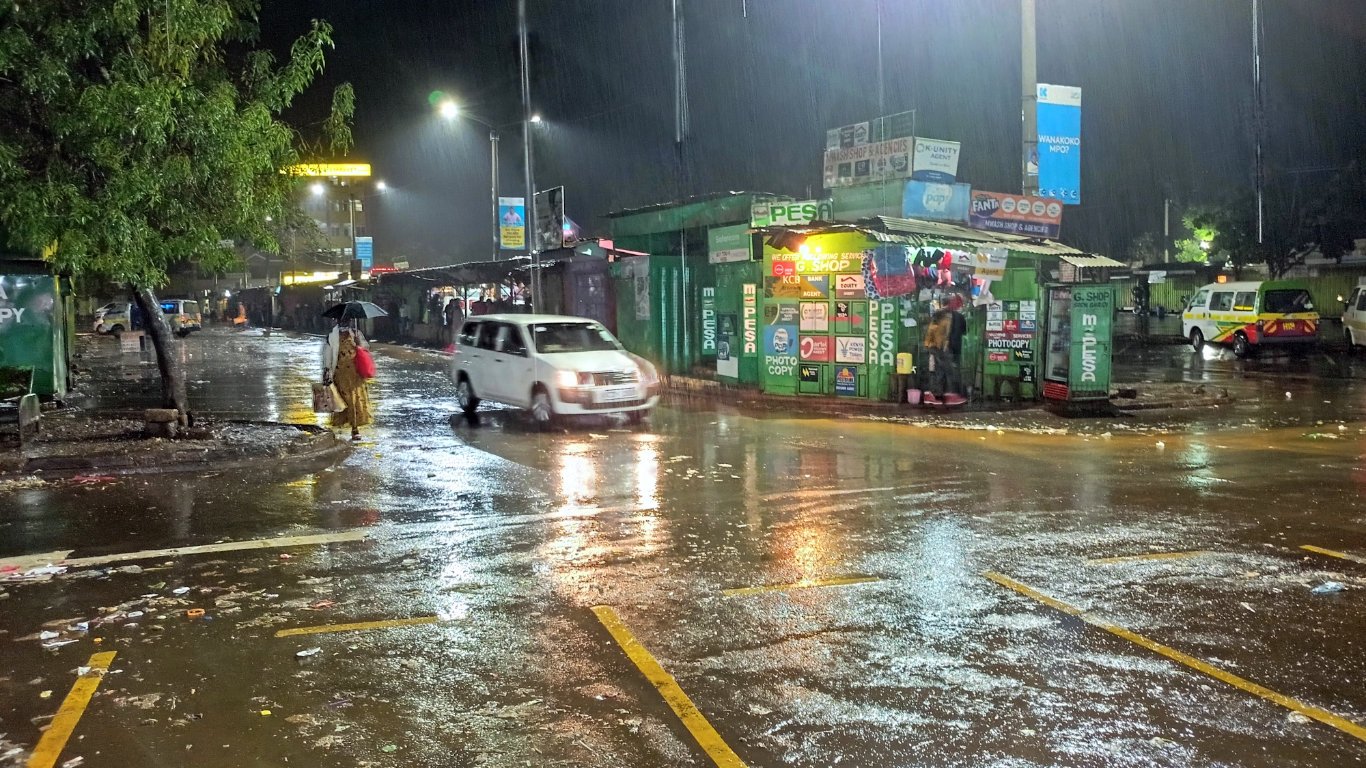
In the last three months of 2023, Mombasa recorded 934 millimetres of rain. That is close to three times what the city normally gets between October and December, and it fell on the beaches, not the safari plains. Most Kenya El Niño travel advice now circulating gets that geography backwards.
The strength of Kenya’s short rains this year depends more on the Indian Ocean Dipole than on El Niño itself. The Dipole, usually shortened to IOD, measures the temperature difference between the western and eastern tropical Indian Ocean. When the west runs warm, moist air moves toward East Africa. The October to December rains swell.
The published science is unusually clear on this. A 2025 study in Scientific Reports found that the sign of the IOD “can almost always predict the sign of the short rain seasonal anomaly, which is not always the case” for El Niño. Kenya’s own forecasters say the same thing. In August, Narok County’s director of meteorological services, Stanley Kinyua, told reporters that the outcome of the season “will majorly depend on the strength of the IOD.”
The Pacific side is not in doubt. On 10 September the United States Climate Prediction Center put the odds of a very strong El Niño above 90 per cent. It gave a 75 per cent chance of the strongest event since 1950. The Indian Ocean side is the open question. As of the last August readings, the IOD index sat at its +0.4 °C threshold but had not yet held there long enough to count as an established event. Australia’s Bureau of Meteorology publishes that figure weekly, and it is the one number worth checking before paying a deposit.
Where the Rain Fell Last Time
Kenya’s last El Niño put its heaviest rain on the coast and in the north-east, not on the main safari circuit. The Kenya Meteorological Service Authority’s State of the Climate 2023 report records Mombasa at 934.2 millimetres for October to December, 288 per cent of its long-term mean. Lamu recorded 636.1 millimetres, 295 per cent of normal. Garissa, Wajir and Mandera also ran far above normal. The same report records flood damage to 80 per cent of Mandera County’s road network.
The history behind that pattern matters for planning. In 1997, a record El Niño coincided with a strong positive IOD. The rains began in October, intensified in November and ran into January, and East Africa recorded its largest wet anomaly in the modern record. In 2015, one of the strongest El Niños ever measured arrived with a weak IOD, and Kenya’s short rains were merely moderate. Nearly every seasonal model over-forecast that year. The two oceans have to line up for the season to turn extreme, and in 2023 they did.
For a visitor that reshapes the usual advice. December beach weeks in Diani, Watamu and Lamu sit in the zone that took the largest anomaly in 2023. The Ministry of Health has placed every coastal county on its high-risk list for 2026. The Maasai Mara’s two recent tourist rescues, in May 2024 and March 2026, both happened during the March to May long rains. Both were at riverside camps on the Talek River. Narok is on the forecaster’s at-risk list this year, and its rain has already started. The Mara will be open. The useful question for a camp is how far its tents stand from the Talek, and how high.
Seven Places to Ask About Before You Book
The failures in recent wet seasons were specific, and each has a workaround. Kenya El Niño travel advice is only useful when it names them.
- The Talek River camps in the Maasai Mara flooded on 1 May 2024. The Kenya Red Cross rescued 61 people that day, 36 of them by helicopter. The river burst its banks again in early March 2026 and damaged the Talek Bridge. Sekenani Gate, the Mara Triangle and the northern conservancies kept operating. Higher ground is the answer.
- The Kedong section of the Mai Mahiu–Suswa–Narok road, the main drive to the Mara, closed for six days in March 2026 under floodwater and silt. The Kenya National Highways Authority named the Ngong–Suswa road as the alternative.
- Mbogolo Bridge on the Mombasa–Malindi road was cut on 25 November 2023. The diversion ran through Mazeras, Kaloleni and Mavueni. A higher replacement bridge reached completion works in 2025. Confirm with the highways authority that it is open.
- The Malindi–Sala Gate approach to Tsavo East was impassable on 27 February 2026. The Kenya Wildlife Service directed visitors to Voi Gate and Bachuma Gate.
- Madogo–Garissa road closed in late November 2023 after the Tana River burst its banks, cutting Garissa town off entirely.
- Mombasa Road and Uhuru Highway in Nairobi flooded on 6 and 7 March 2026. In the same week, weather was among the factors, alongside a strike, that sent flights from Jomo Kenyatta International Airport to Mombasa. A buffer night in Nairobi before an international departure is cheap insurance.
- The Nairobi–Mombasa Madaraka Express kept running through the May 2024 floods while the parallel highway jammed for hours. Kenya Railways moved the night departure from 10 pm to midnight so passengers could reach the terminus. Book the train, and leave early for it.
Timing, Money and Health
The rain arrives in stages, and the Mara’s biggest fixed cost does not fall with the season. Kenya’s forecasters expect no dry break in western Kenya and the Rift Valley, Narok included. Nairobi and the central highlands should see onset around the second week of October. The coast and the south-east follow in the third and fourth weeks. The forecast describes “prolonged wet spells” running into January, where a normal year’s rains usually finish by mid-December.
Camp rates do drop from November, apart from the festive fortnight. The Maasai Mara National Reserve gate fee does not. The County Government of Narok, which administers the reserve, charges non-residents USD 200 a day from July through December, and USD 100 only from January. The Kenya Wildlife Service lists a single rate for the whole year at Amboseli and Lake Nakuru, USD 90 for a non-resident adult, so November costs the same as August. A Cabinet decision to hand Amboseli’s day-to-day management to Kajiado County, on the Narok model, has not yet taken effect. The Kenya Wildlife Service remains custodian, and Kenya Geographic has covered the handover and the earlier seasonal-pricing plan that never reached the gate.
The Ministry of Health has put all 47 counties on alert and named 21 as high risk, including every coastal county. It lists cholera, malaria, dengue and Rift Valley fever among the hazards. Speak to a travel-health professional about prophylaxis before you fly, and pack for standing water rather than for dust.
Parting Shot
None of this argues against coming. Kenya in a wet November is green, quiet and cheaper at the camp, and the roads that fail are the same roads every year. The useful Kenya El Niño travel advice this season is narrow. Watch the Indian Ocean reading. Treat the coast as the exposed leg rather than the safe one. Ask each property the one question about its river. Kenya Geographic will update this page as the season develops. Bookmark it, and explore the Safiri Kenya blog for the routes and parks that sit above the floodline.

Comment (0)