
Updated 3 October 2026. When we published this story in November 2025, we reported the handover of Amboseli to Kajiado County as under way. In December 2025 the High Court suspended the transfer while a constitutional petition is heard, and it barred the county again in July 2026. We also gave the non-resident park fee as US$60 and said a rise to US$90 had been suspended. In fact US$90 had taken effect on 1 October 2025. Both points are corrected below. For the full story of the court case and today’s fees, read Amboseli Park Fees: US$90 at the Gate, a Handover Stuck in Court.
Over a decade ago, I visited the small town of Kimana, just 44 kilometres from Amboseli National Park. My visit took me through the Kimana Sanctuary, which partly lies within the Kimana Swamp at the junction of the Kimana and Isinet Rivers. The swamp is fed by underground seepage from Mount Kilimanjaro and by surface runoff during the rainy season, making it a vital lifeline for the diverse wildlife in Amboseli. At that time, the African Wildlife Foundation (AWF) was actively working in the area to address the mushrooming irrigation farming that had sprung up as more people settled in Kimana. This rapid expansion of small-scale agriculture posed a potential threat to the swamp, highlighting the delicate balance between community livelihoods and wildlife conservation.
The sanctuary itself was born from efforts in the 1970s, when Amboseli National Park pioneered collaboration with surrounding communities to protect critical natural resources across the ecosystem. This early work sparked a nationwide movement, encouraging wildlife-based enterprise and establishing ecotourism as a way for communities to benefit directly from wildlife on their lands. Formed in 1994, the Kimana Sanctuary became one of the country’s first community-driven conservation initiatives, celebrated as a flagship “people’s park.” Today, together with adjacent properties, it operates under the auspices of the Amboseli Land Owners Conservation Association (ALOCA).
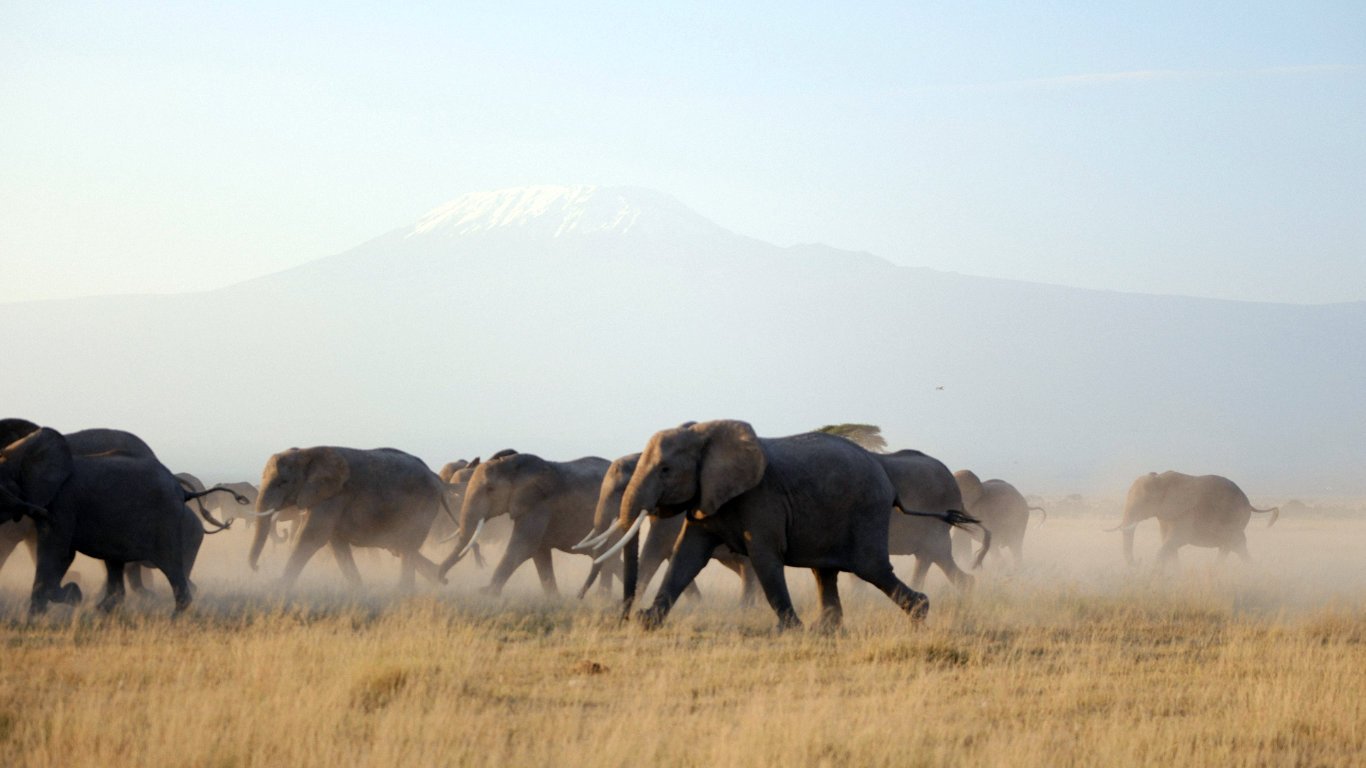
Even then, from my vantage in Kimana, the silhouette of elephants wandering the plains and the distant peak of Kilimanjaro hinted at the wild beauty of Amboseli itself. That early exposure sparked my ongoing interest in the park, an interest that has only grown as the plan to move its management from Kenya Wildlife Service (KWS) to Kajiado County has run into court.
What the Deed Set Out
The national government and Kajiado County signed a Deed of Transfer of Management Functions in October 2025, and it was gazetted on 24 October 2025 in Gazette Notices 15230 and 15231, as reported by the Kenya News Agency and The Standard. Under the deed:
- Kajiado County would take over conservation, wildlife security and tourism operations in the park for 15 years, subject to renewal.
- KWS would keep ownership of the park and oversight of key functions.
- Revenue would be shared: county 50% and national government 50% in FY 2026/27; county 70% in FY 2027/28; from FY 2028/29 the county would keep everything except 5 per cent, held by the national government for research and ecological monitoring.
- A transition committee would oversee the handover until 30 June 2026, with the national government paying staff and managing existing contracts in the meantime.
Where the Transfer Stands
Court orders have stopped the transfer. On 30 December 2025, Justice Bahati Mwamuye of the High Court issued conservatory orders that suspended it while a constitutional petition by Joseph Kasau Masaa is heard. On 12 July 2026 the High Court, through Justice Gregory Mutai, barred Kajiado County and Governor Joseph Ole Lenku for a second time, in interim orders pending a contempt hearing set for 24 July (The Standard). We could find no published outcome of that hearing when we searched on 2 and 3 October 2026. Until the court rules, KWS runs the park and its tariff applies.
What the Change Would Mean
For Tourists and Visitors
- Booking and access stay with KWS while the court orders stand. If the transfer goes ahead, the deed hands the county tourism operations; the reports we have read do not say whether it would set its own fees.
- You will still need to abide by national conservation law, because KWS keeps oversight under the deed.
For Conservation and Wildlife Management
- The national government would keep key functions, including research and ecological monitoring.
- Conservation experts quoted by the Kenya News Agency said the transfer’s success would depend on Kajiado County’s capacity to protect the park’s ecological integrity while growing tourism revenue.
For the Local Community
- More local control and revenue flowing to the county can mean jobs, infrastructure, and community programmes.
- The county would also assume responsibility for mitigating human-wildlife conflict, maintaining infrastructure, and ensuring sustainable tourism.
For the National Government
- KWS would be freed from the operational burden of day-to-day park management while retaining oversight responsibilities.
- National authorities would gradually lose a share of revenue as it shifts to the county, though standards and research oversight remain national.
What You Pay Now
Amboseli park fees are set by the KWS tariff that took effect on 1 October 2025 under Legal Notice No. 160 of 2025 (Capital FM). A non-resident adult pays US$90 a day, not the US$60 this story first reported.
If the transfer goes ahead and the county gains a say over fees, the nearest example is the Maasai Mara, a county-run reserve. Our July 2024 report covered its non-resident fee rising from US$70 to US$200 a day.
What this Means for Your Travel Planning
- Check that your quote uses the October 2025 tariff: a package priced at US$60 leaves a gap of US$30 per non-resident adult per day.
- Check with your tour operator or lodge: Are entry fees included? Will there be amendments if the court rules during your booking window?
- Plan stay duration and gate entry times: today’s ticket covers a single entry for up to 24 hours.
- Watch for a ruling on the petition: if the transfer proceeds, watch for any new fee schedule, and ask your operator to keep you updated.
The Entry Fees in Force
KWS conservation fees for Amboseli, in force since 1 October 2025 (KWS fee schedule):
| Visitor category | Adult (per day) | Child or student (per day) |
|---|---|---|
| East African citizen | KES 1,500 | KES 750 |
| Kenya resident | KES 2,025 | KES 1,050 |
| Non-resident | USD 90 | USD 45 |
| Citizen of another African country | USD 50 | USD 25 |
Notes: A car with fewer than six seats adds KES 600 a day. Kenyan citizens aged 70 and over, people with disabilities and children aged five and under are exempt. Vehicle fees, guided-tour escort fees and add-ons vary; always confirm what your package includes, and confirm payment options with KWS on 0800 597 000.
A Grounded Look at the Change
The planned shift of operational management to Kajiado County was presented as giving local communities greater control while the national agency maintains standards. The courts now have to decide whether a national park’s management can be devolved this way. For visitors, understanding fee structures, timing, and inclusions is essential to avoid surprises and plan effectively.
Whatever the court decides, Amboseli remains a place of extraordinary wildlife, cultural richness, and ecological significance. Learning from the experience of Maasai Mara, careful planning allows you to support both the park and local communities while enjoying one of Kenya’s most iconic safari destinations.

Comment (0)