
Walk into any Java House in Nairobi today and something quietly extraordinary greets you. Hanging on the walls, filling spaces that once held nothing more interesting than a paint finish, are actual paintings — local work, by local hands, telling local stories. It seems small. It isn’t. That decision to hang art where people eat, laugh, and linger helped crack open a door that had been shut for a very long time.
For decades, making art in Kenya was a brave and mostly thankless act. Talented people produced extraordinary work and found almost no market for it. Collectors were few, galleries were scarcer, and the cultural conversation stopped well short of putting Kenyan contemporary art on the same level as a career worth pursuing. Then, almost imperceptibly at first and then all at once, everything changed. The Kenyan art revolution didn’t announce itself with a single event. It arrived through coffee shops and cafés, through constitutional change, through a generation that grew up online and refused to accept that African art belonged only in ethnographic museums and curio shops.
The Ground That Was Being Prepared
To understand what exploded, you need to understand what was quietly being built underneath. In 1972, an American named Alan Donovan and Kenya’s first Vice President, Joseph Murumbi, co-founded African Heritage — Africa’s first pan-African gallery. The concept was radical for its time: raise African handicrafts and material culture from the status of souvenir trinkets to that of serious art objects with world-class appeal. Donovan went further. He designed and built the African Heritage House near Mlolongo, on the edge of Nairobi National Park — a sprawling mud-architecture masterpiece drawing on Great Zimbabwe, Hausa mosques, and Swahili structures.
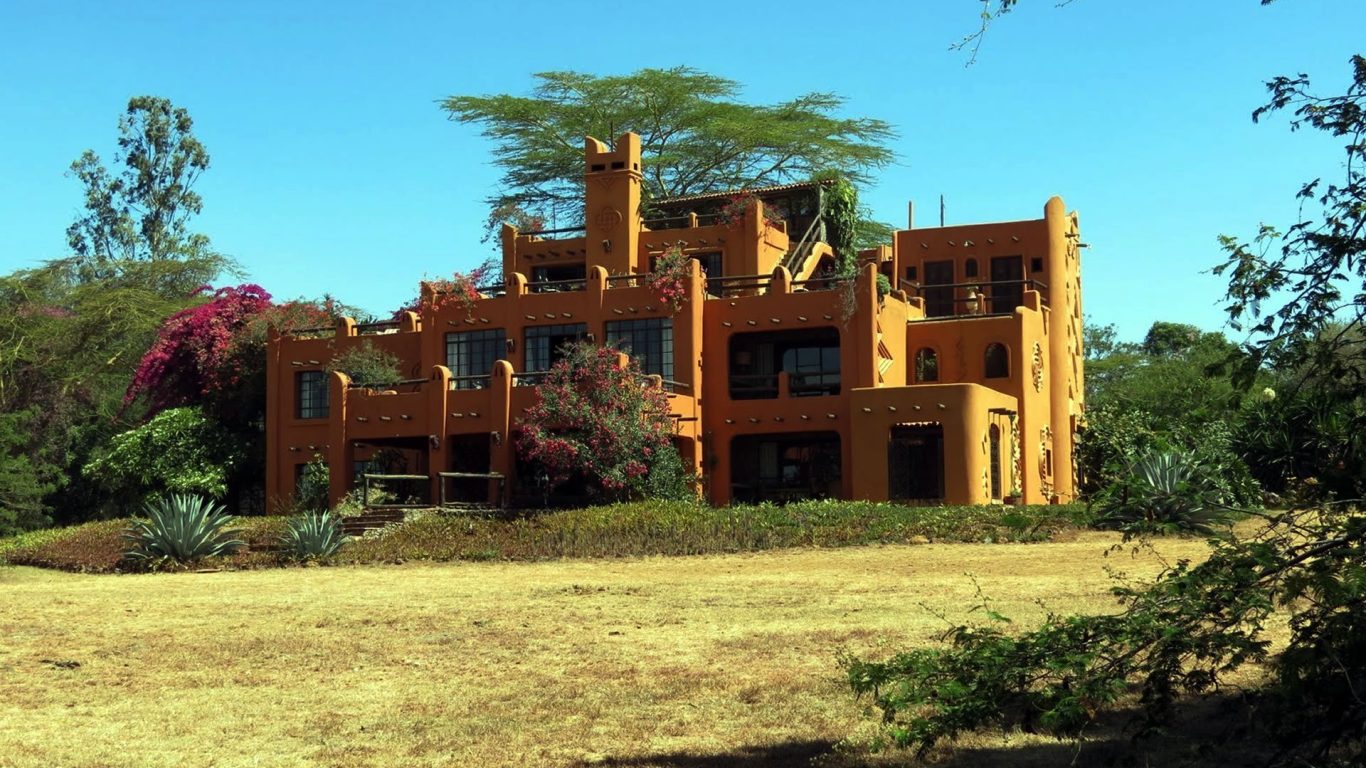
Architectural Digest described it as “an architecture rising from the sere Kenyan plain like an outcropping of earth, a vision of usefulness informed by the African genius for decoration.” At its peak, African Heritage ran over 500 full-time employees and more than 50 outlets worldwide. When it closed in 2003, the Tuesday African Heritage Buying Day morphed into what became the Maasai Markets — which now operate daily across Nairobi. That legacy did not disappear. It went underground, into the soil of the city, and waited.
Donovan passed away in December 2021, but the African Heritage House still stands, still open for tours, meals, and overnight stays. To visit it is to step inside a single man’s life-long argument that African art deserves reverence — and to understand that the Kenyan art revolution had deep, deliberate roots.
What Actually Triggered the Boom
The shift happened on multiple fronts simultaneously, and that convergence is what made it unstoppable. First, Kenya’s 2010 constitution changed the political temperature. It consolidated protections for freedom of expression and fundamentally altered what felt possible to say out loud — in conversation, in civic life, and on canvas. Painters, street artists, and performers all felt it. The right to speak, and to be heard, suddenly had legal teeth.
Second, mobile connectivity transformed the audience. When the mobile internet boom hit Kenyan shores around 2007, artists gained something they had never had: a direct line to each other and to the world, without needing a gallery owner’s approval or a government body’s sanction. Instagram didn’t just help artists find buyers. It made the art itself a cultural event.
Third, and perhaps most underrated — spaces changed the conversation. Java House, founded in 1999 on Ngong Road and expanding steadily across East Africa, placed coffee culture and casual exhibition together. Art Caffé went further, turning dining rooms into gallery walls. These weren’t art spaces tolerating food — they were social spaces that normalised art as part of everyday life. Suddenly a new middle class, sitting over a macchiato or a Sunday brunch, was forming opinions about Kenyan painters. Asking who made that piece. Wondering what it would cost to take it home.
The Pioneers Who Held the Line
Before the boom, a smaller number of artists and institutions carried the weight. Elimo Njau founded Paa ya Paa Arts Centre — one of the oldest continuously running art galleries in Africa — and his body of work helped define the visual language of post-independence Kenya. Jak Katarikawe painted pastoral dreamscapes of stylised cows, birds, and lush landscapes that became instantly recognisable across East Africa. Meek Gichugu developed his iconic “Blue Figures” series — elongated human forms rendered in electric blue — creating one of the most recognisable visual signatures in Kenyan art.
These artists did not have the luxury of a thriving market. They worked anyway. Their perseverance meant that when buyers finally arrived, there was a body of serious work waiting for them.
The Names That Made the World Look
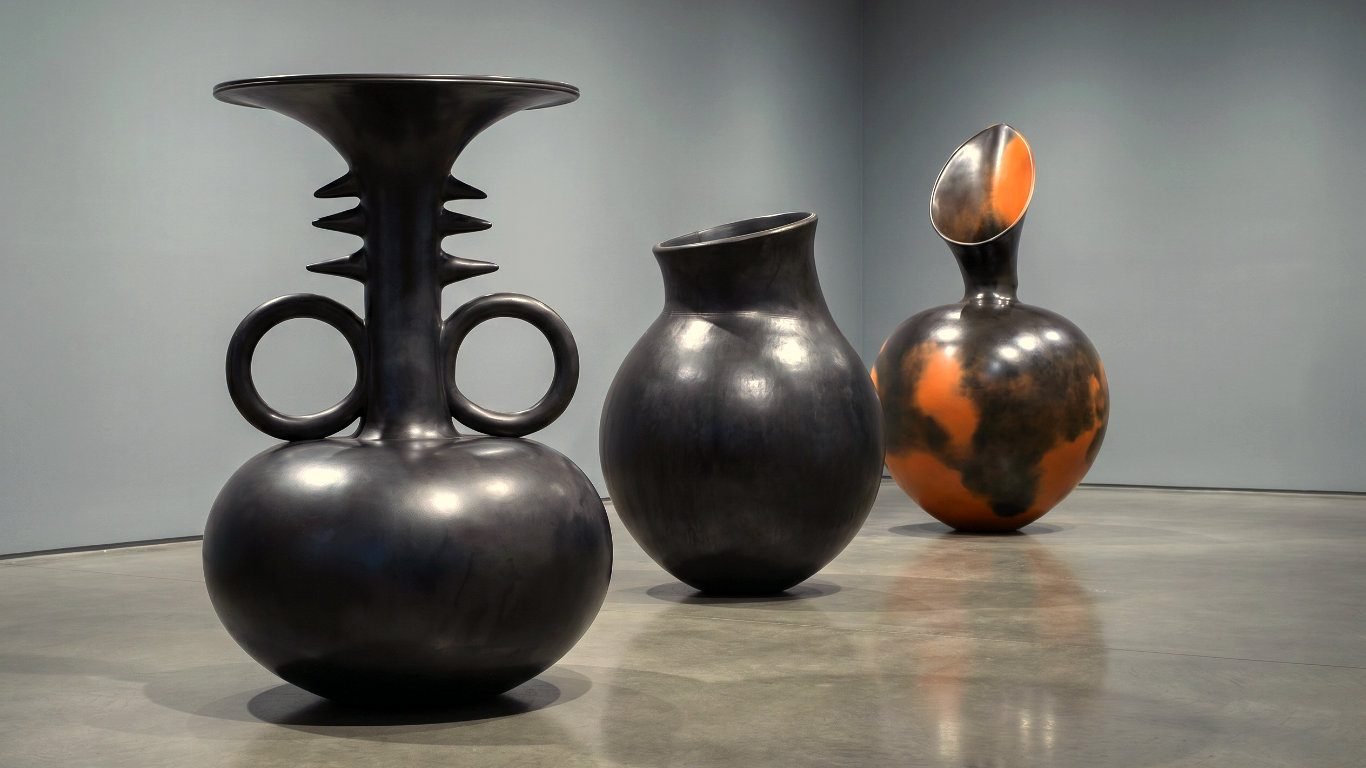
The Kenyan art revolution announced itself internationally through artists who refused to stay local. Wangechi Mutu became globally significant with large-scale collage and sculptural work interrogating gender, postcolonialism, and identity. Her monumental sculptures were installed at the entrance of the Metropolitan Museum of Art in New York — a moment that reframed what “Kenyan artist” could mean on the world stage. Michael Armitage’s painting The Conservationists (2015) reworks East African narrative with global contemporary technique, and today stands as arguably Kenya’s closest equivalent to a museum-level internationally recognised masterpiece. Magdalene Odundo’s hand-built ceramic vessels, exhibited across the world’s finest institutions, are considered masterworks of form, balance, and craft. Cyrus Kabiru sculpts extraordinary “C-Stunners” — spectacle frames built from discarded urban metal — a vision of Afrofuturism and recycling that has attracted collectors from London to Tokyo.
At home, Michael Soi built a reputation for sharp, satirical commentary — his China Loves Africa series dissects the complex, sometimes neocolonial relationship between China and the continent with bold colour and pointed intelligence. Boniface Maina paints surrealist figures in abstracted form, capturing the city’s chaos and beauty simultaneously.
Where the Market Lives Today
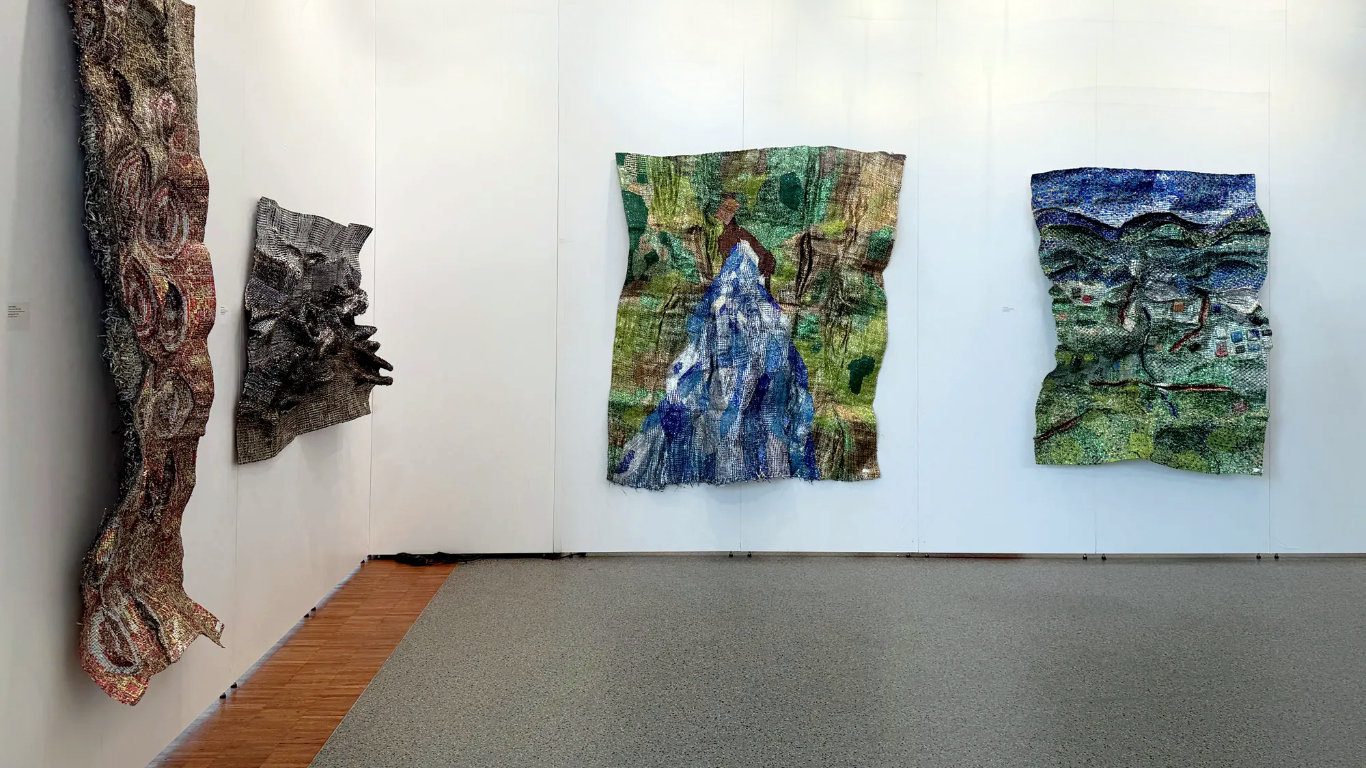
The infrastructure for buying and selling Kenyan art has grown considerably over the past decade. Circle Art Gallery, based in Nairobi, pioneered East Africa’s first fine art auction in 2013 and has run it annually since, attracting serious collectors from across the region. The One Off Contemporary Art Gallery in Rosslyn has long championed both established and emerging talent. Kuona Trust and GoDown Arts Centre function as creative hubs — part gallery, part residency, part community — mentoring new artists and facilitating exchange. Red Hill Art Gallery, run by Hellmuth and Erica Rossler, is producing an index of five hundred East African artists — the scope alone tells you something about how far the scene has come.
For buyers entering the market, works by emerging Kenyan artists can be found starting from KES 15,000–50,000 (roughly USD 115–385). Mid-career artists with exhibition histories command KES 80,000–500,000 (USD 615–3,850). Works by internationally recognised names can reach into the millions of shillings at auction, with exceptional pieces crossing the million-shilling threshold comfortably. The Maasai Markets — Donovan’s indirect legacy — still operate across Nairobi and offer accessible entry points for textile, craft, and decorative art at all price ranges.
The Street Took Over
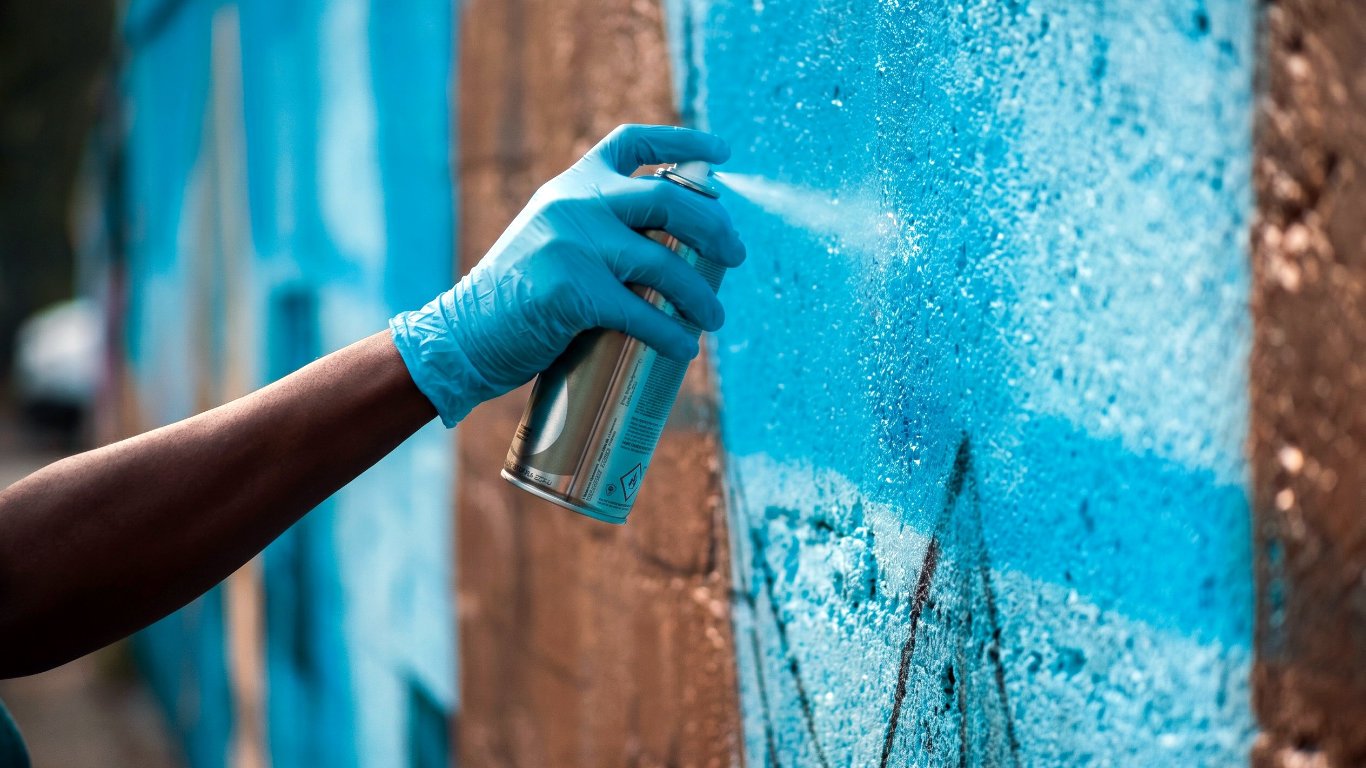
One of the most dramatic stories within the Kenyan art revolution belongs to graffiti — and it is a story of complete rehabilitation. Through the 1990s and early 2000s, graffiti was criminalised, associated with matatu culture and urban rebellion. Artists like Bankslave and Swift9 began changing that perception — not by asking permission, but by producing work so visually compelling and so narratively rich that it became impossible to dismiss. Murals gave way to social commentary. Social commentary attracted NGO commissions. NGO commissions opened the door to government and corporate work.
The shift became impossible to ignore when Nairobi’s beautification programmes incorporated graffiti murals. Uhuru Gardens renovation featured large-scale commissioned works. Modern corporate buildings in Westlands and Upper Hill invited muralists in as design collaborators. At one point, a Nairobi governor commissioned artists to paint entire neighbourhoods — the city itself becoming a canvas. What was once an act of defiance became an act of civic pride.
Instagram accelerated everything. A finished mural photograph shared on a Tuesday can go viral by Thursday. That viral moment becomes a commission enquiry. The commission enquiry becomes a career. Graffiti artists today sit at the intersection of public art, brand design, architectural aesthetics, and urban identity — and they are earning serious money doing it.
The Stage Has Always Been Alive
The visual art story tends to dominate the conversation, but Kenya’s performing arts scene deserves its own full telling. Kenya National Theatre on Harry Thuku Road — a short walk from the University of Nairobi — has been the heartbeat of theatrical life for generations. Its recent renovations transformed the main auditorium (450 seats) and the more intimate Ukumbi Mdogo (120 seats) into properly equipped performance spaces with modern lighting and acoustics. Productions here range from re-imagined classics like The Trials of Dedan Kimathi to sharp contemporary comedies by companies like Heartstrings Kenya and Phoenix Players. The weekly PAL Live (Performances After Lunch) poetry and spoken word programme runs every Thursday, and has grown beyond Nairobi into counties across the country.
The Kenya International Theatre Festival brings international productions to Nairobi while showcasing Kenyan work to the world. Stand-up comedy nights, poetry slams, and Afro-fusion concerts fill Friday and Saturday evenings. On any given weekend, the good seats disappear within hours of going on sale — a fact that would have seemed fantastical twenty years ago.
Ngoma na Sarakasi, run by the Kenya Cultural Centre, celebrates percussion, dance, and acrobatics as living art forms. This is not heritage performance for tourists. It is a training platform for working artists building real livelihoods.
An Art Tour of Kenya: A Suggested Itinerary
If you want to experience the full breadth of what the Kenyan art revolution has produced, Nairobi alone offers a serious three-day itinerary — and that barely scratches the surface.
Day One: The Foundations
Start at the African Heritage House near Mlolongo — book breakfast on the rooftop and take the tour of Donovan’s extraordinary collection. The house is the origin story made physical. From there, drive into the city centre to the Nairobi Gallery (the former Provincial Commissioner’s office) to explore the Murumbi Collection — Kenya’s finest archive of African art, historical artefacts, and textiles. End the afternoon at Paa ya Paa Arts Centre in Kileleshwa — one of the oldest galleries in Africa, and still very much alive.
Day Two: The Contemporary Scene
Morning at Circle Art Gallery in Lavington, where East Africa’s most serious contemporary market lives. Browse what is on exhibition and ask about the annual auction calendar. From there, head to GoDown Arts Centre in Industrial Area — a converted warehouse that hosts studios, exhibitions, and performance spaces. In the afternoon, walk the graffiti murals in the CBD and Westlands, pausing at Uhuru Gardens to see how large-scale commissioned murals have transformed the space. Finish at One Off Contemporary Art Gallery in Rosslyn.
Day Three: The Street and the Stage
Morning at the Maasai Market (check the weekly schedule — they rotate venues across Nairobi) for accessible, tactile engagement with craft and wearable art. Spend the afternoon at the Kenya National Museum compound, which sits adjacent to the Kenya Cultural Centre. In the evening, attend a production at Kenya National Theatre — book ahead, especially for weekend shows. If your timing is right, a Friday or Saturday stand-up night or poetry slam will show you a city laughing and thinking out loud.
Beyond Nairobi
Lamu Old Town rewards those willing to travel — a UNESCO World Heritage Site where Swahili architecture and craft tradition remain living, breathing realities rather than museum exhibits. The Karen Blixen Museum in Karen, Nairobi, offers a counterpoint perspective: the colonial lens through which much of Kenya was first narrated to the outside world. It sits parallel to the indigenous art story rather than inside it — but understanding that distinction is itself a form of cultural literacy.
What This All Means
The Kenyan art revolution was not handed down from above. No government programme sparked it. No single institution caused it. It was built from the ground up — by artists who kept working through decades of neglect, by café owners who decided the walls deserved something honest, by street painters who turned rebellion into profession, by constitutional change that made expression feel safer, and by a generation that grew up knowing their stories were worth telling.
The result is a scene that is genuinely thrilling to be inside. Prices are still accessible by global standards. Artists are still building. New voices emerge every season. The infrastructure — galleries, auction houses, theatre venues, street commissions, online platforms — continues to strengthen.
This is the moment to come and see it. Not when it is finished and famous and retrospectively celebrated in coffee-table books. Now, while it is happening, while the paint is still fresh on the walls of the city, while the theatre seats are filling fast and the conversations in the galleries are urgent and alive. Kenya is not waiting to be discovered. It is busy creating.

Comment (0)