

In the remote reaches of Kenya, where the borders of Somalia and Ethiopia meet, lies a destination as mysterious as it is marvellous. Mandera—an uncharted frontier in northeast Kenya—awaits the bold traveller ready to embrace its layers of history, culture, and nature. Uncover Mandera, a region where bullet-scarred relics stand as silent witnesses to history, and local rivers pulse with the heartbeat of life, commerce, and adventure. Whether it’s retracing the escape route of a former dictator, navigating a bustling river, or sampling a rare taste of local culture, Mandera offers more than just a journey—it offers a story. Let’s dive into the captivating experiences waiting in this corner of Kenya.
Major General Siad Barre’s Getaway Convoy: A Glimpse into History

A traveller standing at the Mandera Border Control Post feels history seep into the air. The dusty outpost, where Kenya meets Somalia, bears remnants of a turbulent past. In the stark silence, bullet holes mark the remnants of old vehicles—a Land Rover and two buses—that speak to a chapter etched in Mandera’s memory: the escape of Somalia’s former president, Major General Siad Barre. In 1991, Barre fled Somalia in a convoy across Mandera, a last-ditch attempt to escape the rebellion overthrowing his government. Soon, he would settle briefly in Kenya before moving to Nigeria.
Though these vehicles are fading away in the unforgiving Mandera sun, they hold memories of a defining era in East African history. Walking beside these relics, visitors feel the weight of the political turbulence, the daring escape, and Barre’s final flight to safety. Time may eventually erode these physical remnants, but their stories live on, waiting for those who come to uncover Mandera and retrace the footsteps of history.
The Boat Captains of Dawaro River: A Journey Across Borders

Just a short journey from Mandera town flows the Dawaro River, also known as Dawa, a lifeline for the people of Kenya, Ethiopia, and Somalia. The river has forged a unique livelihood for locals on its banks: ferrying people across using boats crafted from repurposed oil barrels. These boats, ingeniously assembled with a framework of sturdy wood atop, carry both passengers and goods across the water. Guided by captains armed only with a single pole, this crossing is as thrilling as it is humble—a testament to the locals’ resourcefulness.
For only KES 200, visitors can experience a river journey like no other, punctuated by the rhythmic sound of the pole hitting the riverbed. The captain skilfully manoeuvres through the water, his boat a vessel of ingenuity. On the Ethiopian side, the vibrant Suftu market awaits, bustling with the sounds of trade, chatter, and the rich aromas of local fare. Plans are underway to construct a trade centre here, and two bridges are in the works to better connect the communities on each side. But for now, visitors are invited to uncover Mandera by boat, where tradition and commerce blend seamlessly along this lively river.
Nyirnyir: A Taste of Mandera’s Culinary Heritage
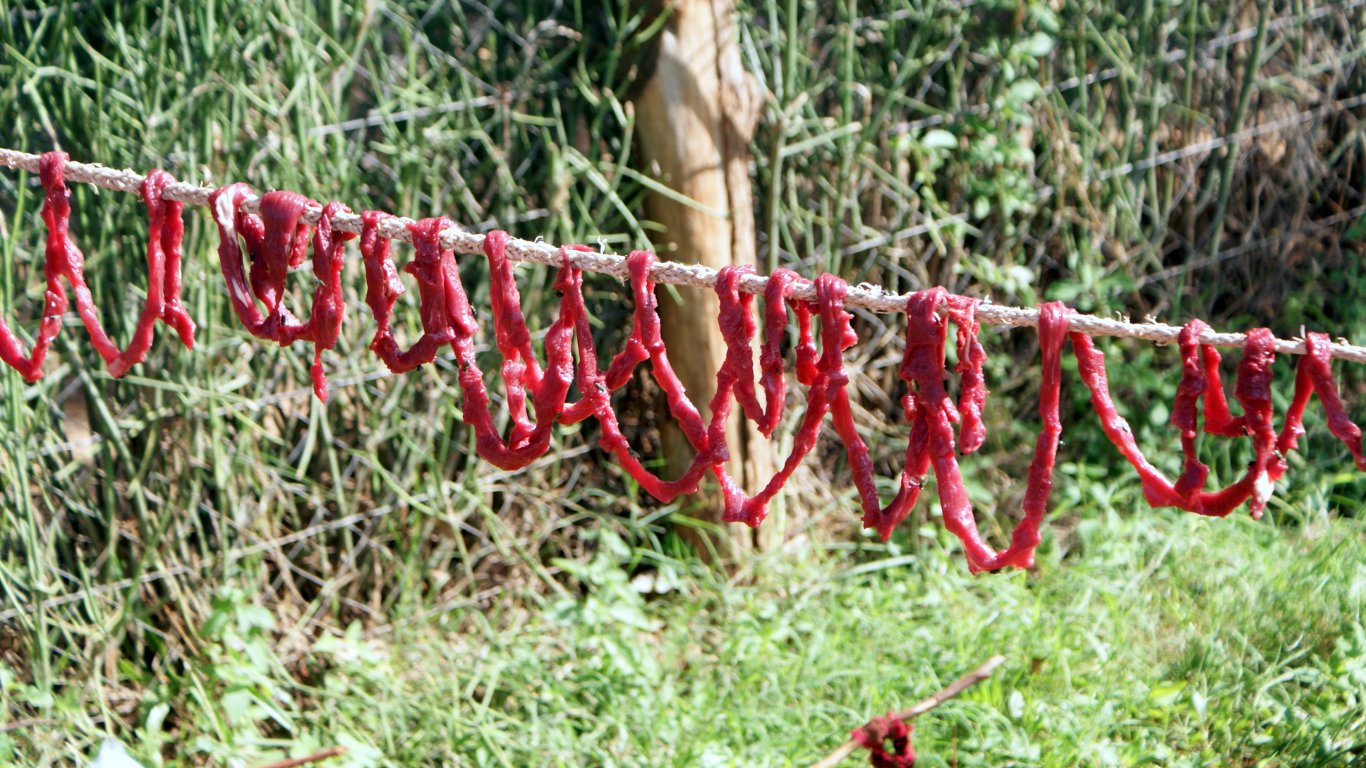
Mandera’s history is steeped in resilience, and nowhere is this spirit more evident than in its food. Here, camel meat is more than sustenance; it’s a cultural artefact. Nyirnyir, or dried camel meat, is an age-old delicacy among the pastoralist communities. Crafted from strips of camel meat seasoned with garlic and iliki, then sun-dried, Nyirnyir is a dish as rich in flavour as it is in tradition. Once dried, the meat is fried, sealed in camel ghee, and stored in traditional bags crafted from camel skin and hooves—a preservation method that stretches one camel’s yield for up to six months.
In Mandera, Nyirnyir serves as both a staple and a cultural symbol. The dish represents the resilience of pastoralist communities that have adapted to the harsh, arid climate of Kenya’s northeast. Travellers can uncover Mandera by tasting its soul, savouring the simple, profound flavours of Nyirnyir. Reserved traditionally for men at breakfast, the dish embodies both sustenance and ritual, a link to the past carried forward by generations.
Why Mandera?
Mandera is not the destination for those seeking luxury or relaxation. It’s a place for adventurers, history buffs, and travellers who thrive on authenticity. In Mandera, you’ll find experiences unlike any other in Kenya. Here, each step takes you deeper into the story of a resilient people, a history defined by boundary-defying courage, and a culture that thrives amid challenges. To uncover Mandera is to step into a world that defies convention, offering a raw and unfiltered glimpse into Kenya’s vibrant northeast.
So, are you ready to venture beyond the well-worn paths? To uncover Mandera is to discover the uncharted—the unique and the unforgettable. Each story here is a part of a larger tale, one that invites you to connect with Kenya’s hidden treasures. Embrace Mandera, and let its history, culture, and spirit be your guide.

Comment (0)