
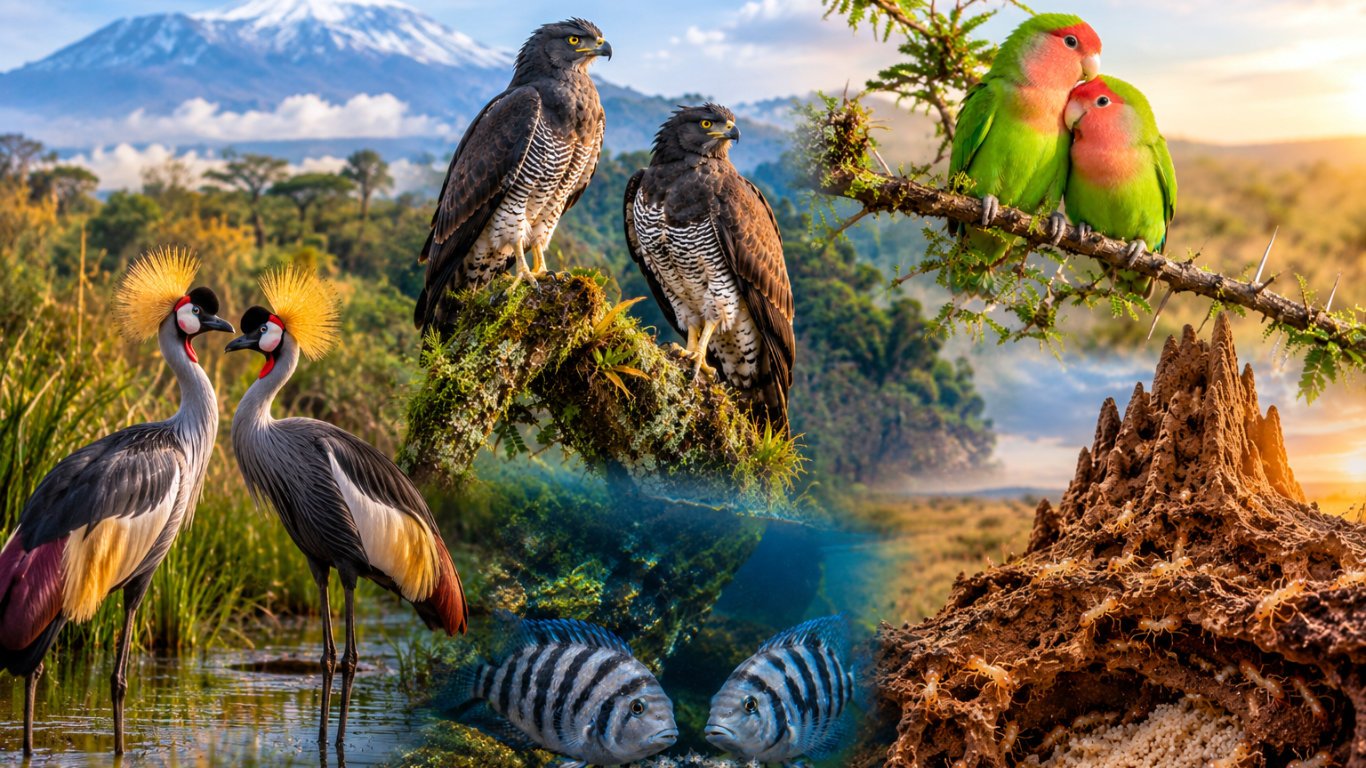
The African wilderness is often described as a theatre of survival — predators pursuing prey, migrations crossing continents, and animals driven by the relentless instinct to reproduce and move on. Yet look a little closer, and a quieter, deeply fascinating story begins to emerge. In wetlands, forests, savannahs, lakes, and even beneath the soil, some species form enduring partnerships that last far beyond a single breeding season. These animals challenge the common assumption that wildlife relationships are brief and purely instinctive.
Across Kenya’s diverse ecosystems, several remarkable species live as monogamous wildlife couples, sharing territory, raising young together, and in some cases remaining loyal partners for life. For travellers on safari, discovering these partnerships reveals a different rhythm in the wild—one built not just on survival but on cooperation and lasting bonds.
Grey Crowned Crane — The lifelong dancers of the wetlands
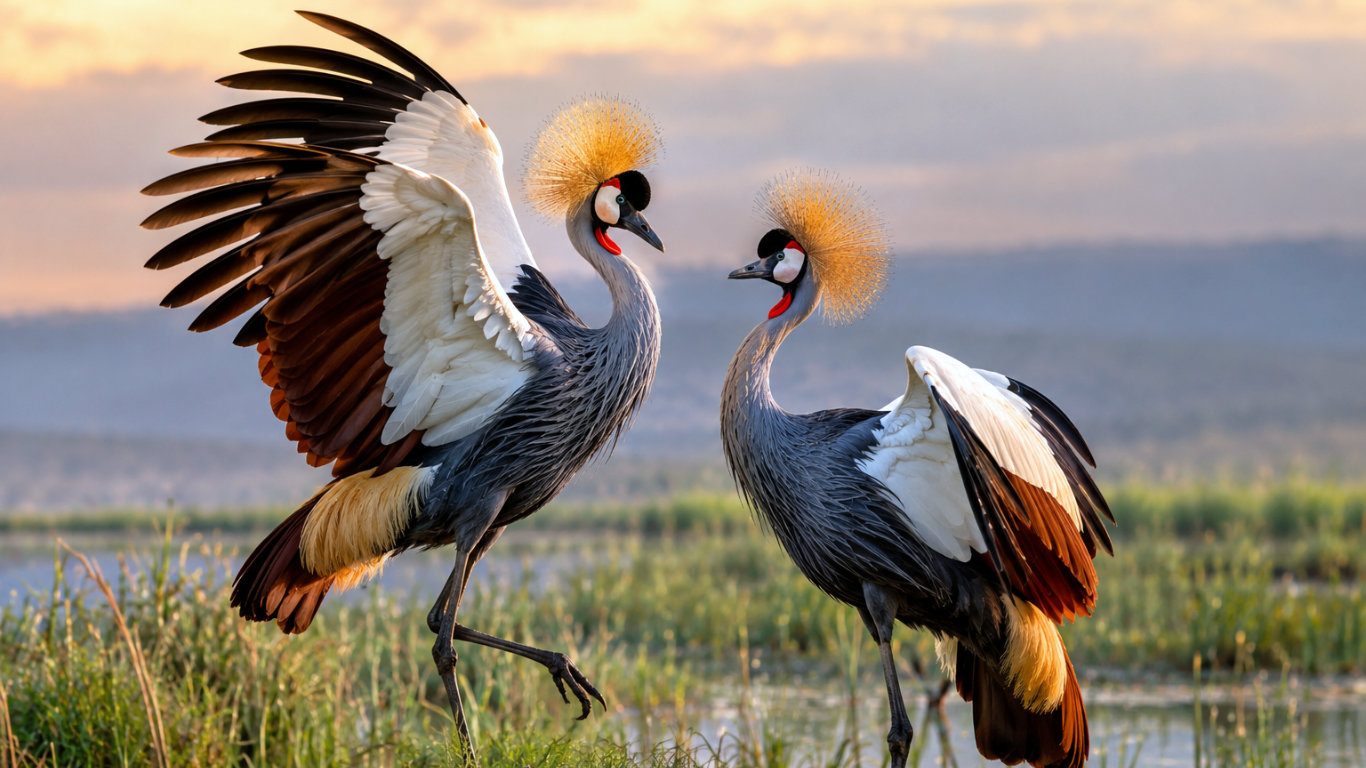
Few wildlife partnerships in Africa are as graceful as those of the grey crowned crane. Instantly identifiable by the halo of golden feathers atop its head, this elegant bird is famous for forming lifelong pair bonds.
Courtship begins with one of nature’s most captivating displays. The pair leap into the air, bow deeply, flap their wings, and toss grass into the air in a rhythmic dance. What makes their story remarkable is that this dance is not just part of courtship. Even years after pairing, cranes continue performing these displays to reinforce their bond.
Once together, the pair defend their wetland territory, build nests among reeds, and raise their chicks cooperatively. The relationship often lasts for the rest of their lives.
Travellers exploring wetlands around Lake Naivasha or the open plains of Amboseli National Park may witness a pair standing quietly side by side or dancing together at sunrise — a living symbol of enduring partnership in the wild.
African Harrier-Hawk — The acrobatic hunters of the forest
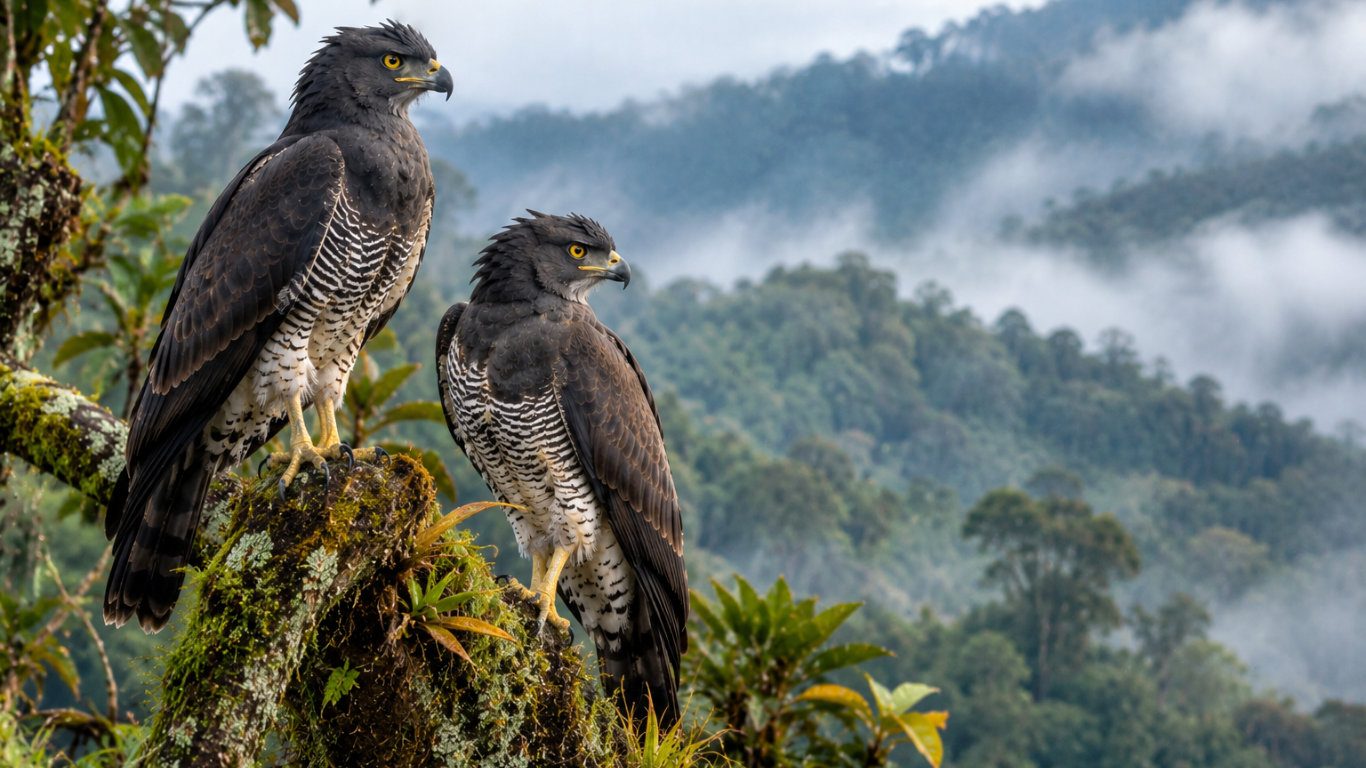
One of Africa’s most unusual prey birds glides high above Kenya’s forests. The African Harrier-Hawk possesses an extraordinary adaptation: double-jointed legs that allow it to bend its limbs backwards and reach deep into tree cavities to extract hidden prey.
Behind this strange anatomy lies a story of long-term partnership. Harrier hawks often form multi-year pair bonds, maintaining the same territory together and returning to familiar nesting sites season after season.
While one bird scans the forest canopy, the other may explore tree trunks and hollows, searching for insects, reptiles, or nestlings. Their hunting strategies and shared territory reveal a quiet coordination between partners that can last for many years.
In the misty forests of Aberdare National Park and along the slopes of Mount Kenya National Park, tourists occasionally glimpse these striking raptors gliding together through the mountain air.
Rosy-faced Lovebird — Africa’s inseparable companions
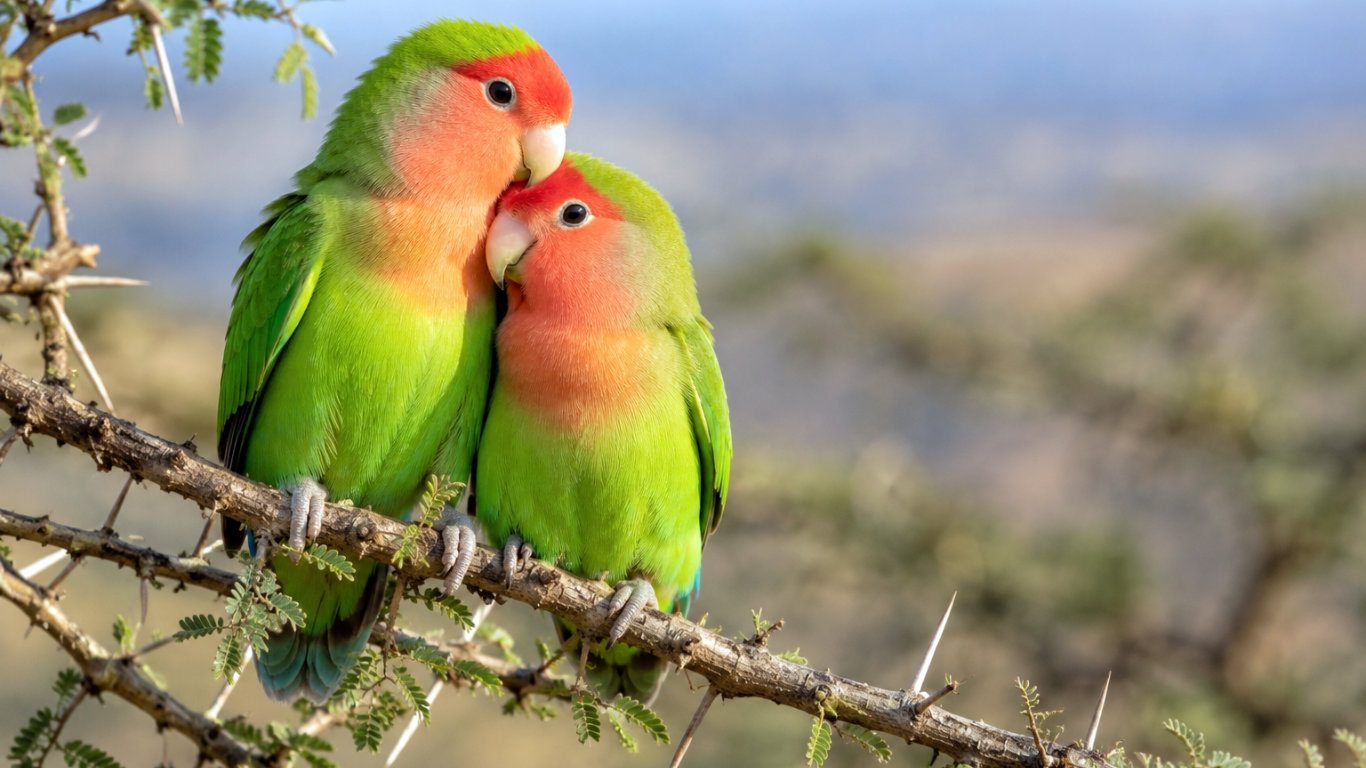
Among Africa’s smallest parrots lives one of its most affectionate wildlife relationships. Rosy-faced lovebirds are famous for forming strong pair bonds that typically last for life.
A bonded pair spends much of the day close together. They gently preen each other’s feathers, share food, and communicate with constant soft calls. It is rare to see one bird without its partner nearby.
These small, but vivid birds bring flashes of colour to the dry landscapes of northern Kenya. In places such as Samburu National Reserve and Buffalo Springs National Reserve, travellers sometimes spot pairs perched closely together on thorny acacia branches.
Their quiet companionship offers one of the most touching examples of monogamous wildlife couples living in the African wild.
Convict Cichlid — The devoted guardians beneath the water
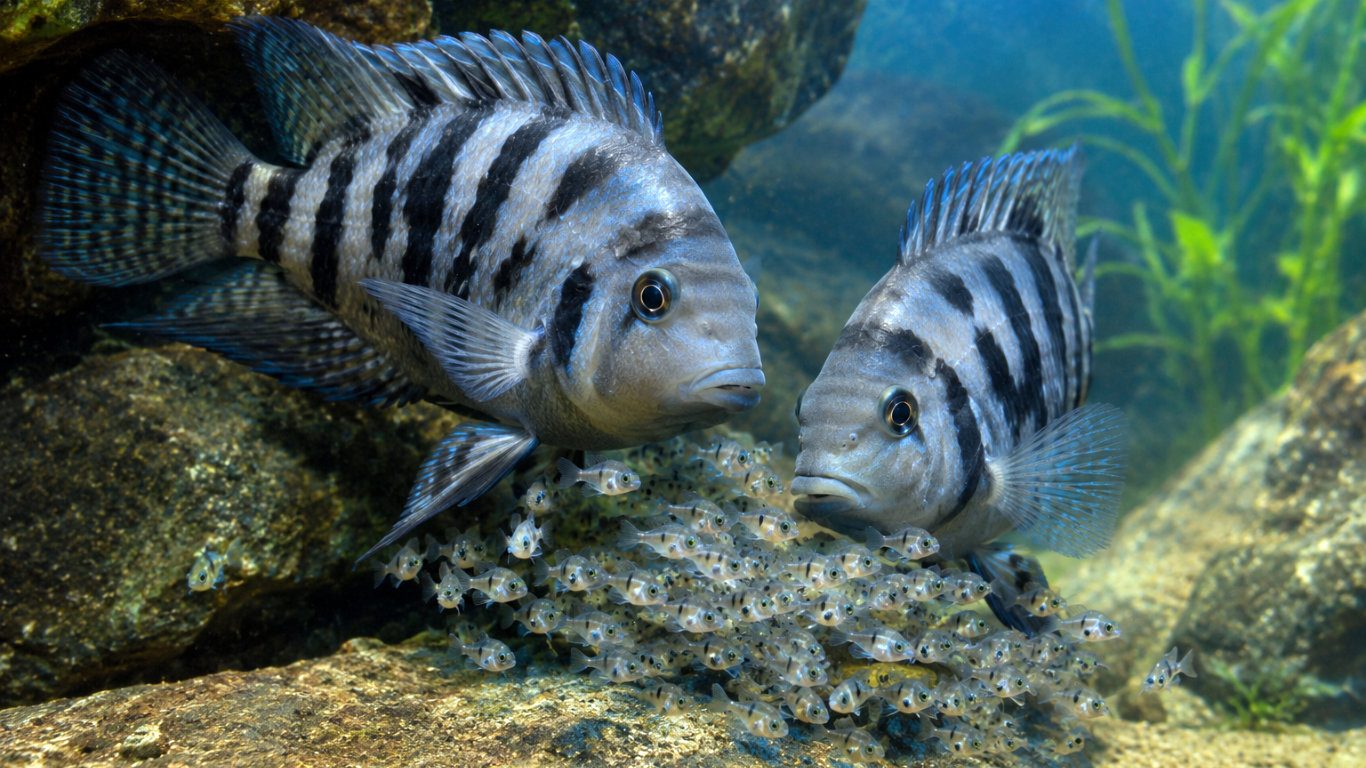
Not all wildlife partnerships on safari happen on land. Beneath the surface of Africa’s lakes and rivers lives a fish whose parenting teamwork is among the most intense in the animal world.
Convict cichlids form tight pair bonds while breeding. After eggs are laid on rocks or submerged surfaces, both parents become fierce defenders of their future offspring. They fan the eggs to keep them oxygenated and aggressively chase away intruders many times their size.
When the eggs hatch, the parents guide the tiny fry through the water like a drifting cloud, herding them to safe feeding areas and guarding them constantly.
In freshwater systems connected to Lake Victoria, this underwater partnership demonstrates how cooperation between mates can dramatically improve the survival of the next generation.
Termite (Macrotermes species) — The royal architects of the savannah
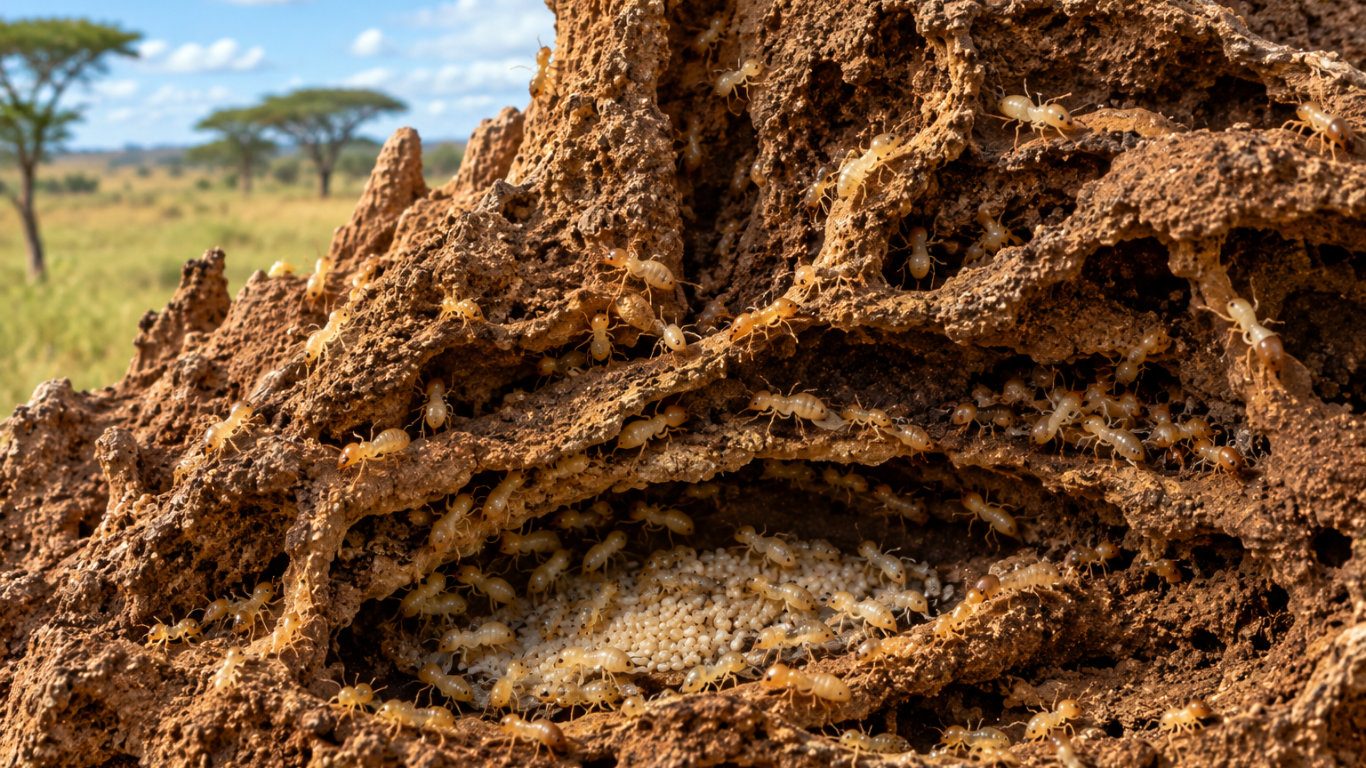
Almost entirely hidden from view are some of Africa’s longest-lasting wildlife partnerships. Beneath the towering termite mounds scattered across the savannah lives a royal couple whose bond can last decades.
At the heart of every colony is a single king and queen. After their mating flight, the pair establish a chamber deep underground where they remain together for life. Over time, the queen grows enormously and may produce millions of eggs while the king continues fertilising them.
Together they sustain colonies that can contain millions of individuals and build towering earthen mounds that shape the surrounding ecosystem.
Driving across the open plains of Maasai Mara National Reserve or Tsavo East National Park, travellers often see these cathedral-like mounds rising from the landscape. Few realise they are looking at the surface markers of one of Africa’s most enduring monogamous wildlife couples.
A quieter story within the wild
People often celebrate Kenya’s wildlife for its spectacle, which includes roaring lions, vast migrations, and dramatic predator encounters. Yet these stories of enduring partnership reveal another dimension of the natural world. These animals, like cranes dancing in wetlands and termite kings ruling underground empires, show that working together and being loyal can be very helpful for staying alive.
For travellers on safari, discovering these monogamous wildlife couples offers a deeper appreciation for the ecosystems around them. It reminds us that beyond the drama of the wild lies something equally compelling — relationships that quietly endure across seasons, landscapes, and sometimes entire lifetimes.

Comment (0)